Skip to content
Music-Centred Dementia Care
Menu

About

People, affiliations, contact.

The MCDC programme is led from the University for the Creative Arts by a small team, working in long-standing collaboration with Memory Tracks and a network of clinical, co-design, and policy partners.

Team

The MCDC team at the University for the Creative Arts — three named authors on the MCDC white paper and a fourth colleague from the Audio Research Cluster who co-authored the Comparative Effects cohort study.

Dr J. Harry Whalley

Reader in Music & Sound, UCA (Farnham) · Director, Audio Research Cluster · Principal of the MCDC programme · Co-lead of ACT

University for the Creative Arts (2017–present)

Reader in Music & Sound at UCA Farnham and co-founder and director of the Audio Research Cluster. His practice-led research brings composition, technology, and science into sustained dialogue — using number theory, neuroscience, and geology as catalysts for creative investigation. He composes in contemporary classical, film, and electroacoustic forms; supervises doctoral candidates; sits on the AHRC peer-review panel; and is Composer in Residence at St Vincent's Chapel, Edinburgh. MCDC extends a longer line of his work in music cognition and music-and-dementia care.

Open questions for Harry (2)
  • Confirm the one-line role summary above (or rewrite to taste)
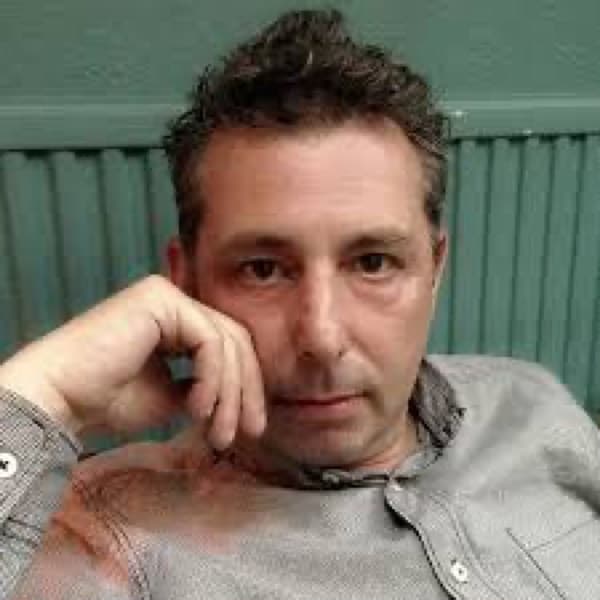
  • A portrait photo to drop in place of the placeholder

Mark Brill

Lecturer in Advertising, UCA (Epsom) · Co-lead of ACT

University for the Creative Arts

Lecturer in Advertising at UCA Epsom (Business School for the Creative Industries), with nearly twenty-five years of industry experience in advertising agencies and brand strategy. His research centres on creative innovation — specifically how the Internet of Things can be used to create meaningful experiences. That line of enquiry leads directly into ACT's design as a care-record-integrated observational platform. He is a Fellow of the Higher Education Academy and a regular keynote speaker on emerging media.

Open questions for Harry (3)
  • Confirm the bio's framing — specifically the IoT → ACT bridge; rewrite if overstated
  • Personal site / portfolio link if you'd like one surfaced
  • A portrait photo to drop in place of the placeholder

Dr Lara James

Audio Research Cluster, UCA · Co-author of the MCDC white paper and the Comparative Effects cohort study

University for the Creative Arts

Dr Lara James is part of the Audio Research Cluster at UCA and a named author on the MCDC white paper (2026). She is also a co-author on the mixed-methods cohort study comparing live and recorded music in people living with dementia, produced with Whalley, Armstrong, and Brill. [PLACEHOLDER: 2–3 sentences covering her broader research focus and contribution to MCDC — paste a UCA profile URL or bio text and I'll expand this in the same way as Harry's and Mark's.]

Open questions for Harry (4)
  • UCA profile URL or other authoritative source
  • Short bio — research focus and contribution within the MCDC programme
  • ORCID, if you'd like it surfaced
  • A portrait photo to drop in place of the placeholder

Dr James Armstrong (he/him)

Lecturer in Music and Sound Production, UCA (Farnham) · Audio Research Cluster · Co-author of the Comparative Effects cohort study

University for the Creative Arts

Lecturer in Music and Sound Production at UCA Farnham, year lead and lead admissions tutor for music and sound subjects. Teaches on the BA (Hons) Music and Sound Production and BMus (Hons) Composition programmes. His research examines how different environments shape musical performance beyond acoustical characteristics — person-environment relationships and socio-cultural significance — with current interests in field recording, underground and DIY music cultures, music in health and wellbeing, and storytelling through sound. Active projects include musical intervention for Alzheimer's patients, which joins him to MCDC through the Comparative Effects cohort study. Beyond UCA, he works as a mastering engineer, hosts a monthly radio show, and runs an independent record label.

Open questions for Harry (3)
  • ORCID, if you'd like it surfaced
  • Public radio-show / record-label / mastering links worth surfacing (many visitors will be curious)
  • A portrait photo to drop in place of the placeholder

Memory Tracks collaboration

A long-running research partnership, not a licensed product.

Memory Tracks is the app at the centre of Component 2 of the MCDC framework — the tablet / smartphone platform that pairs personally meaningful songs with daily care tasks (mealtimes, dressing, medication, washing, exercise) so that music becomes a consistent behavioural cue for people living with dementia.

The relationship between the MCDC team at UCA and Memory Tracks Ltd is a sustained research partnership, not an arm’s-length licensing arrangement. The first empirical evaluation — a mixed-methods cohort study with fourteen participants across two Pendine Park care homes in North Wales — was published jointly (Cunningham, Brill, Whalley, Read, Anderson, Edwards, Picking, & Zollo, 2019, Journal of Healthcare Engineering). The MCDC white paper extends that collaboration into a full programme: Memory Tracks remains the daily-care instrument, and the MCDC team at UCA contributes the framework, the observational layer (M-CST-ob), and the ACT analytics platform that consumes the app’s data.

Memory Tracks Ltd also develops MedTracks — a consumer-facing sibling product that narrows the song-task-association principle to a single task, medication adherence. It draws on the same evidence base about preserved musical memory and is the subject of ongoing research with NHS Highland; an associated paper from that research is currently under review. Memory Tracks and MedTracks together trace the product lineage that precedes and underwrites the MCDC framework’s clinical use.

Two principals sit at the heart of the partnership on the Memory Tracks side:

Stuart Cunningham

Lead author, 2019 Pendine Park pilot paper

[PLACEHOLDER: confirm affiliation — likely Wrexham Glyndwr University / associated institution]

First author on Cunningham et al. (2019), the mixed-methods cohort study that tested the Memory Tracks song-task-association concept across Pendine Park care homes in Wrexham and Caernarfon. Also added to the MCDC white paper author list alongside Whalley, James, and Brill.

Gordon Anderson

Director, Memory Tracks Ltd

Memory Tracks Ltd

Director of Memory Tracks Ltd. Originator of the song-task-association concept that became the Memory Tracks app — the product that MCDC integrates as Component 2 (passive monitoring via daily song-task pairings in care routines). ORCID: 0000-0002-5404-0708.

Andrew Gibson

Clinical collaborator, NHS Highland

NHS Highland, Inverness

NHS Highland co-author on the MedTracks feasibility study — a mixed-methods evaluation of music-prompted medication adherence conducted between December 2024 and February 2025 across three general practices in Inverness, run through NHS Highland's Clinical Research Facility. ORCID: 0009-0007-5606-5945.

Affiliations

The programme is hosted at the University for the Creative Arts. ACT is developed under the anticipatory.care project, funded by Innovate UK through the Zinc Catalyst Healthy Ageing strand. The planned MCDC pilot takes place at Pendine Park in North Wales.

Full partner list — including Memory Matters (Plymouth), Lifecare (Edinburgh), Birdie, and the Welsh Government policy alignment — is on the Partners page.

Contact

For research enquiries: [PLACEHOLDER: research email — e.g. research@...]

For media and engagement: [PLACEHOLDER: media email]

For ACT / anticipatory.care specifically, see the contact forms at anticipatory.care.

Open questions for Harry
  • Preferred public contact email(s) and owning roles
  • Whether you want postal address / ORCID / institutional phone surfaced, or contact kept to email only
  • Media-enquiry routing — directly to you, or via a UCA press office contact